




Key takeaways
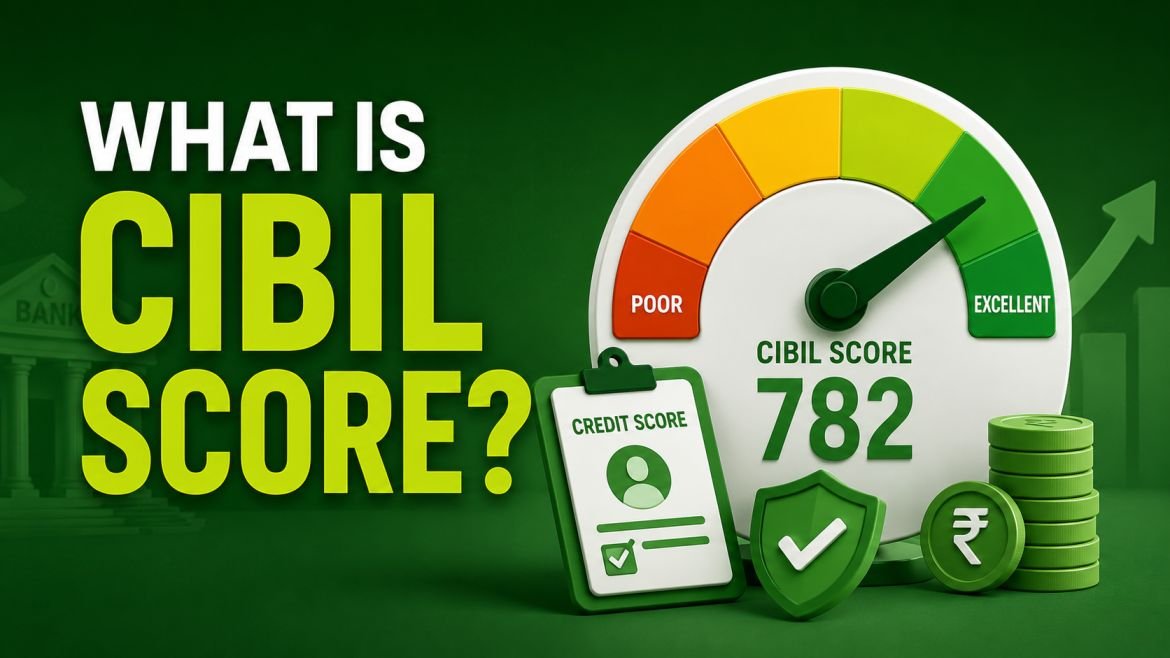
- A CIBIL score is a 3-digit number between 300 and 900 that summarises your credit repayment history
- A score of 750 and above is generally considered good by most lenders
- Payment history, credit utilization, credit mix, and the number of loan enquiries all affect your score
- You're entitled to one free full credit report from CIBIL every year
- Improving a poor score takes consistent, disciplined repayment over months, not a quick fix
Quick answer
Applying for a loan or credit card soon: check your CIBIL score first — a score below 700 could mean rejection or a higher interest rate.
Already have a good score (750+): keep doing what you're doing — pay on time, keep utilization low, and avoid unnecessary new credit enquiries.
What is a CIBIL score?
CIBIL (TransUnion CIBIL) is one of India's credit information companies. It collects data from banks and lenders about how you've borrowed and repaid money — credit cards, personal loans, home loans, car loans — and condenses that history into a single 3-digit score between 300 and 900.
Lenders use this score to quickly judge how risky it is to lend to you. A higher score signals reliable repayment behaviour; a lower score signals missed payments or heavy debt.
CIBIL score ranges
| Score range | What it generally means |
|---|---|
| 750–900 | Excellent — best chance of approval and lower interest rates |
| 700–749 | Good — most lenders will approve, though not always at the best rate |
| 650–699 | Fair — approval possible but may come with stricter terms |
| 550–649 | Poor — higher chance of rejection or the need for a co-applicant |
| 300–549 | Very poor — approval is unlikely without addressing the underlying issues first |
| NA / NH | No credit history yet, or not enough recent activity to generate a score |
A "no history" score isn't a bad score. If you've never taken a loan or credit card, you may see "NA" or "NH" instead of a number. This isn't the same as a poor score — it simply means there's no repayment data yet.
Try the EMI Calculator
Comparing loan offers? Use the EMI calculator to see what a lower interest rate actually saves you.
What actually affects your CIBIL score
1. Payment history (the biggest factor)
Whether you pay your EMIs and credit card bills on time is the single largest influence on your score. Even one missed payment can pull your score down, and the impact stays visible for a while.
2. Credit utilization ratio
This is how much of your available credit card limit you're actually using. Regularly maxing out your card, even if you pay it off every month, can hurt your score. Keeping utilization below roughly 30% of your limit is generally seen as healthy.
3. Credit mix
Lenders like to see a healthy mix of secured loans (like a home or car loan) and unsecured credit (like credit cards or personal loans), rather than relying only on one type.
4. Length of credit history
A longer track record of responsibly managed credit generally helps your score. This is one reason closing your oldest credit card isn't always a good idea.
5. Number of recent credit enquiries
Every time you apply for a new loan or credit card, the lender makes a "hard enquiry" on your report. Too many enquiries in a short span can suggest credit-hungry behaviour and may lower your score slightly.
Roughly how much each factor counts
Credit bureaus don't publish their exact scoring formula, but the broad pattern — consistent across most credit scoring models globally, including CIBIL — looks roughly like this:
| Factor | Approximate weight |
|---|---|
| Payment history | Largest single factor — often around a third or more of the score |
| Credit utilization | Second largest — typically a similar order of magnitude |
| Length of credit history | Moderate influence |
| Credit mix | Smaller influence |
| New credit enquiries | Smallest, but still noticeable with frequent applications |
These are approximate, illustrative proportions, not CIBIL's published formula — bureaus keep exact weightings confidential and may adjust their models over time. The practical takeaway stays the same regardless of the exact percentages: payment history and utilization matter far more than anything else.
CIBIL vs other credit bureaus
CIBIL isn't the only credit information company operating in India. Experian, Equifax, and CRIF High Mark also compile credit reports, and different lenders may pull from different bureaus. It's possible — and fairly common — to see a slightly different score from each bureau for the same person, since they may not all have identical data at the exact same time. If you're rejected based on one bureau's report, it's worth checking whether another bureau's report tells a different story before assuming your credit health is uniformly poor.
How this plays out in real life
Vikram earns ₹90,000/month and wants a ₹40 lakh home loan. His CIBIL score is 810 because he's never missed an EMI on his car loan and keeps his credit card utilization low. He qualifies easily and negotiates a competitive interest rate.
Meera, a college student, gets an add-on credit card with a ₹15,000 limit. By using it for small purchases and paying the full bill every month, she starts building a credit history that will help her score once she needs a loan later.
Suresh runs a small shop and occasionally delays his business loan EMI by a few days when cash flow is tight. Over two years, this has pulled his score down to 640, making it harder to get a fresh working capital loan.
Divya, a freelance writer, has never taken a loan or credit card. When she applies for a personal loan, her report shows "NH" (no history). The bank asks for additional income proof since there's no repayment track record to assess.
Mr. and Mrs. Iyer have paid off their home loan years ago and use one credit card responsibly. Their score remains above 780, which helps when they co-sign a loan for their son.
Arjun, an NRI who moved abroad five years ago and let his Indian credit card lapse, applies for a home loan in India for a property purchase. His CIBIL score reflects no recent activity, so the bank asks for additional documentation and a higher down payment, since there's little recent repayment history to assess despite his strong overseas income.
How to improve your CIBIL score
The list below covers the essentials. For a complete walkthrough — including every free way to check your score and a month-by-month improvement plan — see our full guide on checking and improving your CIBIL score for free.
- Pay EMIs and credit card bills on or before the due date, every time
- Keep credit card usage well below your total limit
- Avoid applying for multiple loans or cards within a short period
- Don't close your oldest credit card unless it has a high annual fee you no longer want to pay
- Check your credit report periodically for errors and get them corrected
- If you're a guarantor or co-applicant on someone else's loan, remember it affects your score too if payments are missed
✅ Improving a poor score is realistic, but it's gradual — consistent on-time payments over 6 to 12 months usually show a visible improvement, not an overnight jump.
Common mistakes to avoid
Common mistake: assuming that not using credit at all keeps your score safe. In reality, having no credit history means lenders have nothing to assess you on, which can be just as limiting as a poor score when you actually need a loan.
- Missing even small EMIs, assuming they won't be reported
- Applying for several credit cards or loans in quick succession while shopping around
- Maxing out credit cards even if the balance is cleared every month
- Ignoring your credit report and not checking it for factual errors
Myths vs facts
| Myth | Fact |
|---|---|
| Checking your own CIBIL score lowers it | Checking your own score is a "soft enquiry" and has no impact on your score |
| Closing old credit cards always improves your score | Closing your oldest card can shorten your credit history and sometimes hurts your score |
| You need a loan to have a CIBIL score | A credit card alone, used responsibly, is enough to build a credit history |
| A single missed payment ruins your score permanently | One missed payment does hurt your score, but consistent good behaviour afterward gradually rebuilds it |
Best practices
- Set up auto-debit for EMIs and credit card minimum/full payments to avoid missing due dates
- Review your free annual credit report for accuracy
- Keep 2–3 active credit lines rather than none or too many
- Space out new loan or credit card applications instead of applying to several lenders at once
Frequently asked questions
What is a good CIBIL score for a home loan?
Most lenders consider 750 and above good for home loan approval and better interest rates, though some may approve loans with scores in the 700–749 range on stricter terms.
How often does my CIBIL score update?
Banks typically report your repayment data to credit bureaus monthly, so your score can change every month based on new activity.
Can I check my CIBIL score for free?
Yes, you're entitled to one free full credit report per year directly from CIBIL. Many banks and fintech apps also offer free score checks, sometimes more frequently.
Does checking my own score reduce it?
No. When you check your own score, it counts as a "soft enquiry" and does not affect your score at all. Only "hard enquiries" made by lenders when you apply for credit can have a small impact.
How long does it take to improve a poor CIBIL score?
There's no fixed timeline, but consistent on-time payments and low credit utilization typically show a noticeable improvement over 6 to 12 months.
Does having no loans or credit cards mean a bad score?
No, it usually means no score at all ("NA" or "NH") rather than a bad one, since there's no repayment history to evaluate.
Can paying off a loan early improve my CIBIL score?
It can help by reducing your overall debt burden, but a longer history of well-managed active credit is often viewed just as favourably, so closing an account isn't always necessary.
What is considered a bad CIBIL score?
Scores below 600 are generally considered poor and can make loan approval difficult or result in higher interest rates and stricter conditions.
Do credit card late payments affect my CIBIL score more than loan EMIs?
Both are reported to credit bureaus and can affect your score. What matters most is consistency — repeated late payments on either will hurt your score more than a single isolated delay.
Can I get a personal loan with a low CIBIL score?
It's possible but harder — some lenders may still approve it at a higher interest rate or ask for a co-applicant or collateral, while others may decline the application altogether.
Is CIBIL the only credit bureau in India?
No. Besides TransUnion CIBIL, India has other credit bureaus such as Experian, Equifax, and CRIF High Mark, though CIBIL is among the most widely referenced by lenders.
Can two credit bureaus show different scores for the same person?
Yes, since each bureau may not have identical data at the same point in time, and their internal models can weigh factors slightly differently, resulting in a somewhat different score from each one.
Does my income affect my CIBIL score directly?
No, your income itself isn't a factor in the CIBIL score calculation. The score is based purely on your credit repayment behaviour. That said, lenders separately assess your income alongside your score when deciding loan eligibility and amount.
Can a joint loan affect both applicants' CIBIL scores?
Yes, both applicants' credit reports reflect the joint loan, and missed payments affect both individuals' scores, even if only one person is primarily managing the repayments.